

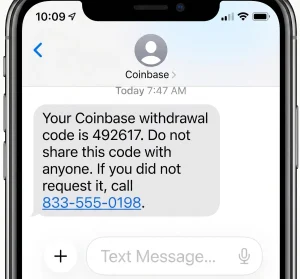
Your mom gets a text that reads, “Your Coinbase withdrawal code is 492617. Do not share this code with anyone. If you did not request it, call 833-555-0198.”
She is immediately concerned even if she does not own cryptocurrency. This confusion is exactly what the sender is counting on. The Coinbase text scam is a widespread phone-based fraud that targets both people who have never purchased crypto and longtime crypto investors.
Here is how the scam works, why older adults are particularly susceptible, and what you can tell your parents before they pick up the phone and call the toll-free number.
How the Coinbase Text Scam Works
Coinbase is a user-friendly, highly secure cryptocurrency exchange and financial technology platform that allows users to buy, sell, store, and trade digital assets such as Bitcoin, Ethereum, and Solana. It has about 8.2 million monthly transacting users.
Scam messages follow a similar script. The recipient gets an unexpected text with a six-digit verification code, a warning not to share it, and a phone number to call “if this wasn’t you.” The setup is designed to resemble a real account login flow.
If they call, a friendly-sounding representative walks them through ‘securing’ their account and asks them to read back the code or confirm their password. Once they do, the scammer can log in and transfer their crypto holdings to themselves.
If the recipient does not have a Coinbase account, the trap works differently. If they call, a convincing representative can talk them into handing over passwords or personal information for other accounts they have.
Several things give these messages away:
- Coinbase never sends a verification code unless the recipient has attempted to log in to their account
- Real companies do not put support phone numbers inside verification texts
- The text has a sense of urgency
- The sending phone number contains an overseas country code
Why Older Adults Are Targeted
Scammers send fake Coinbase text messages by the millions and then wait for the small percentage who take the bait. Older adults are more likely to be in this group because they often have savings to protect and less day-to-day exposure to crypto language. They also have a generational habit of trusting a calm voice on the phone.
Fear, urgency, and a number to call with a helpful-sounding customer service representative are a powerful combination.
This fear-and-urgency pattern appears in many fraudulent text messages.
Our September 2025 Scam Watch flagged Coinbase texts spreading from a Philippines country code. The pretense changes. The emotional trigger does not.
What to Tell Your Parents
The most useful rule to convey to your parent is that a texted verification code is theirs alone, and no legitimate person will ever ask them to relay it.
If they have no involvement with cryptocurrency, remind them to ignore and report any message from Coinbase and other crypto-related accounts.
Walk your parent through these steps for any suspicious text:
Do not call the number in the message, and don’t click any links
Never read a verification code aloud or type it into a website you navigate to from a text message
Delete any suspicious messages and report them as junk so the carrier can block the sender
If they do have a Coinbase account, they should always log in directly from a mobile app, a browser bookmark, or by typing in the URL
The federal government maintains a plain-language guide to recognizing and avoiding phishing scams, which is worth reviewing with your parent.
Because crypto losses are rarely recoverable, prevention matters more in this case than in almost any other.
